On Sherman’s March, or A Meditation on the Possibility of Romantic Love In the South During an Era of Nuclear Weapons Proliferation (1985)
Dir. Ross McElwee – USA – Documentary
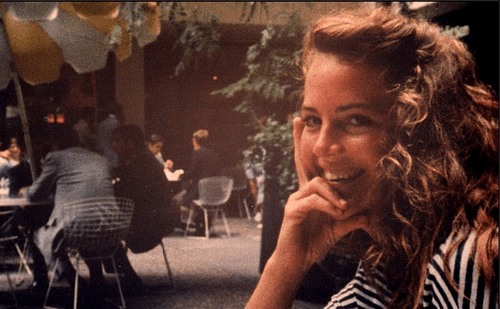
Thanks
“Thanks for what?”
We’re just looking at everything that’s beautiful and you became part of it.
To love, to be loved, to be full of poetry and history, to be full of shit, to feel but to talk vacuous words, not knowing anything and to be blown about like a tumbleweed, a completely vapid personality, a mirror for people to look into and stare at, but not to see. Although I am not a fan of vérité, and this is not an exception, due to McElwee’s meekly proto-incelesque behaviours lurking just beneath the surface, there is something deeply and innately human about his conversations – these are not interviews – which he captures. It’s a masterpiece, although somehow slightly accidentally.
The socioeconomic of the beautiful South he wanders through – McElwee seems to lack the conviction to march – leaves him encountering these beautiful characters. They are not archetypical hicks, or overly blunt or dim, but have a clear and upright way of thinking which I think the director admires as a man who lacks connections and understanding with women. These harsher, near backwater conditions that people grow up around in the US develop different types of people to big city living, and the illusion of simplicity is something McElwee is drawn to. Despite this, he is so distracted by his own parallels (“failures,” as he dubs them) with Sherman regarding women that he misses this fairly obvious but interesting affect the Civil War has on his goals and his life, and the film itself.

The quote at the top is bookended by Charleen asking Ross if he liked the lady she was complimenting, and before he can answer she jokingly says “Mother’ll try to buy her for ya!” Her flirty demonstration tells us much more about her relationship to McElwee than most of her screen presence in the last third of the film. They’re close, and while McElwee is a very passive observer in his own story, and sees his friends blossom, Charleen directs all her attention to the director and wants him to flourish romantically. It’s really quite beautiful to see – it’s fairly obvious that I’m after wanting someone like Charleen in my life. The point I’m dancing around here sadly is the pathetic relatability of it all, for better or, more likely, worse. Though abstracted by nearly 40 years of societal progression, an Atlantic ocean, 20 years in age at time of writing, and being a 2 time member of the LGBTQ community, there’s something so plaintive about his speech, sometimes glib, sometimes modest, to understate oneself so thoroughly in the face of failing to achieve something so intrinsically human, which I don’t like to look at! If I was a stronger person, would I have liked it more for seeing these flaws in myself, or would I have liked it less for having improved myself from this point on?
 The Mezzanine