On Letter from Siberia (1957)
Dir. Chris Marker – USSR & France – Documentary
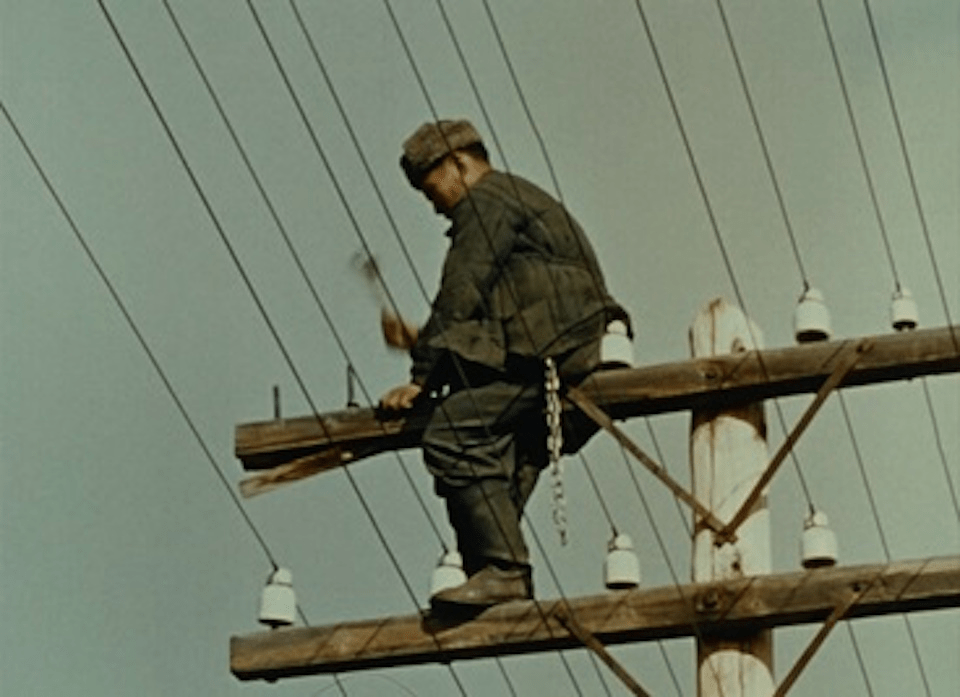
I think the word documentary for many implies a history of the subject, a film that merely displays a catalogue of information from top to bottom, to educate you on some niche topic. This is not true. For me, documentaries become part of the thing they are documenting and its history. once you’ve seen a documentary, you can never separate it from the subject, and your perspective will always be shaped by its perspective. Marker is aware of this, and presents you films from an established point of view, and is upfront about it – he is sending you a letter. It is individualistic, and you know this from the first minute.
Despite being an early example of essay filmmaking, I think this almost deconstructs the concept on its first try. The style does not lend itself to formal argument making as the subgenre has developed in the last few decades, and instead leans on observation with plenty of personal views added in. It appears to make itself resemble some sort of objectivity. 3 times footage is repeated with different commentaries overlain, supporting and denouncing the USSR, and then one neutral – at the same time Marker directly criticises other documentaries, the third is presented as unbiased happy medium, with no tinge of propaganda, not hypocrisy but perhaps sleight of hand?
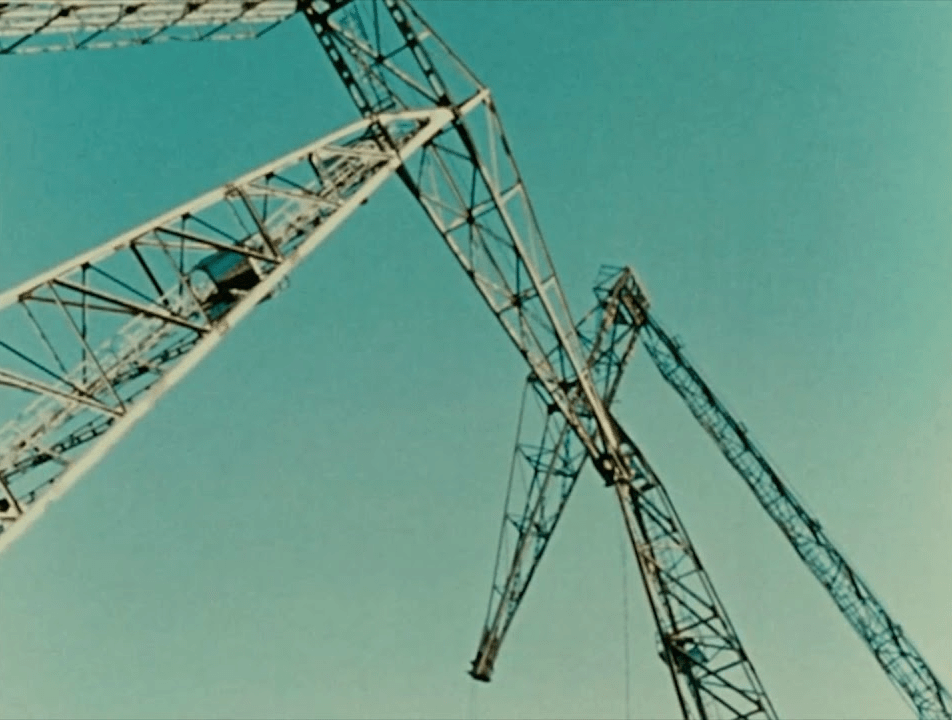
Lessons in etymology, folklore, and philosophy delivered via Night Mail-style proto-pseudo-hip hop, delightful cross sectional cartoons, slow, painterly pans, and handheld POV shots, are all mixed seamlessly, a homogeneous mass of styles. They all work in unison to drive the vivid childlike imagination of the narration, where cranes are monsters, reindeers are advertised to moviegoers as a capitalist wonderprodukt, solution to all your problems, and ducks are not kulaks.
When there’s not enough rain to put [the fire] out, they make it rain firemen.
It has the makings of later Herzog pictures – where his own existentialist philosophy paints his subjects as optimistic, deterministic creatures, Marker fancies with the whole world, playful and innocent. The cartoony nature of some of these comments is not patronising, but humanising; in a world where the Soviet Union was(/is) seen as a harsh and scary place full of unsmiling automata, Marker shows us SIBERIA, that cold, brutal place over there, as a serene, beautiful landscape, full of people like the members of the audience, his wry humour keeping you from distancing yourself from subjects from sequence to sequence.
It’s a thoroughly entertaining watch: educational, enlightens you to think about the philosophy of documentary, well-paced, humorous, pretty to look at, and extremely memorable. Probably the best documentary of all time.
 The Mezzanine