On Platform (2000)
Dir. Jia Zhangke – People’s Republic of China – Drama
Platform is a sweeping epic of a feature which through the intimate collective portrait of a few actors in a drama troupe manages to plot both the nature of ebbing relationships in the eddies of young adulthood and tectonic changes on the most populated nation on Earth.
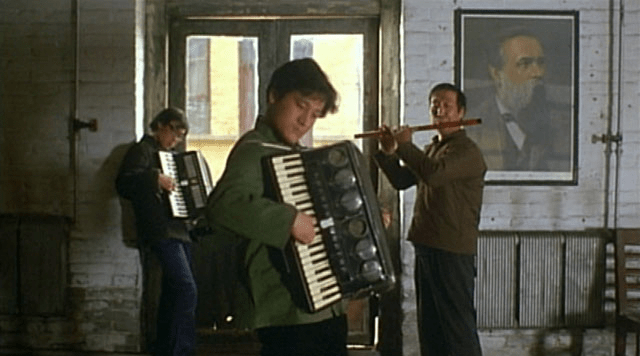
Jia Zhangke is a Chinese writer-director from Shanxi in China, and one of the leading figures of Sixth Generation cinema – a lose collective of younger, edgier filmmakers who used 16mm and video cameras to capture more gritty stories, rebelling against convention. This, Zhangke’s sophomore film is, as with his debút, set primarily in Shanxi, and is an endearing, lingeringly captured epic which lasts 20 years for its subjects. Despite its status as a fictitious narrative film, I feel it is far better described as a docudrama, or perhaps even just a documentary.
The film’s setting, the period of 1979 – 2000, was a fascinating one in China. Cultural waves made by Mao Zedong’s death 3 years earlier in 1976 were being felt all over the country as Hua Guofeng and eventually Deng Xiaoping spearheaded the transition away from Mao’s policies and Soviet-style planned economic systems towards a softer capitalist-tinged society in which free trade was encouraged – socialism with Chinese characteristics. Zhangke turns his macro lens to several subjects and leaves the camera running, and, despite not aiming at the reformers or the bodies themselves, elucidates xiaokang better than any modern history book would.
Every interaction is steeped in history and realism, from the subject of conversation between characters to announcements overhead in lobbies, Zhangke documents each and every part of the post-Great Leap Forward CCP politik, as it would have influenced his childhood and family – after all, the film is dedicated to his father.
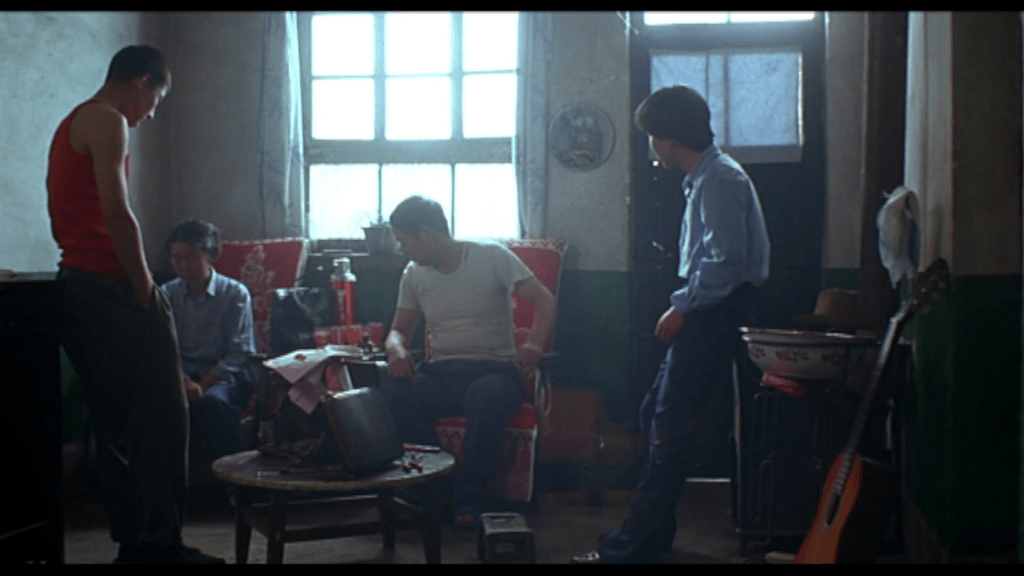
Characters’ narratives are driven more by circumstance and barriers being lifted than desires, more by rebellion and sense of belonging and entitlement than having set goals. Each of them become a part of their environment.

Zhangke’s eye for scenes already feels fully developed. Every shot is gorgeous, has so many layers and depth. The aspect of movement is traded for filling each frame with characters, and the lack of focal points in each sequence allows your attention to wander. The camera is often completely static, and, if not, it pans, slow and sweeping like a nature documentary, treats its subjects equal to the landscape. Further reinforced with scenes which for several minutes may contain no dialogue whatsoever, allowing you to sit with the time passing by, drawing you into the film as another character.
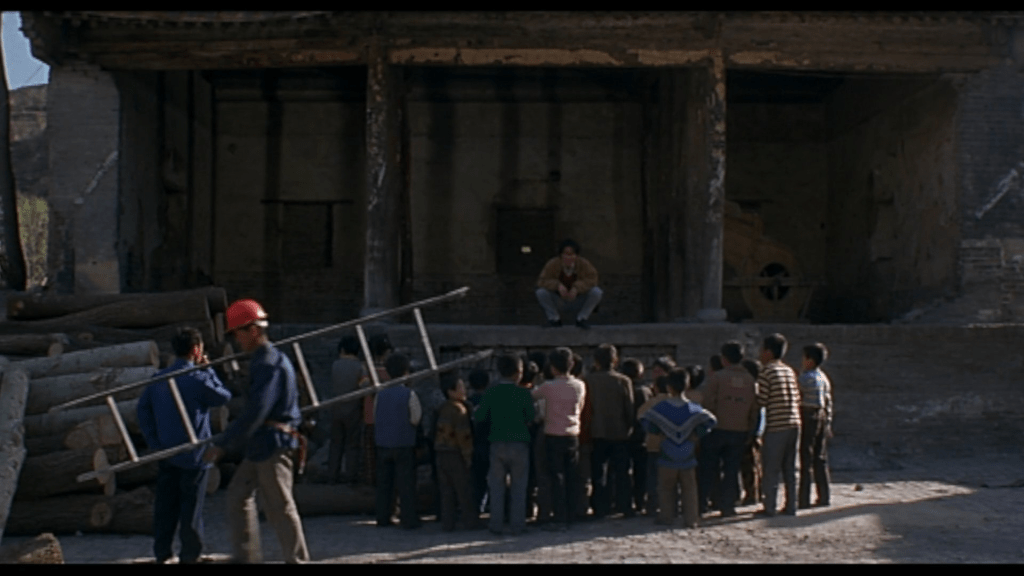
Jia Zhangke remains one of my favourite filmmakers. As with Herzog, his films blur lines between fact and fiction, not by glossing documentary subjects, but by adding so much realism to features that they almost become re-enactments. Sometimes making two films on the same subject, one “documentary” and one “fiction”, as with Dong (2006) and Still Life (2006). Even though his narrative films feel dreamlike, floating away from a firm narrative or plot, they are strongly anchored in reality, and tell us more about ourselves than most documentaries or fictions could themselves.
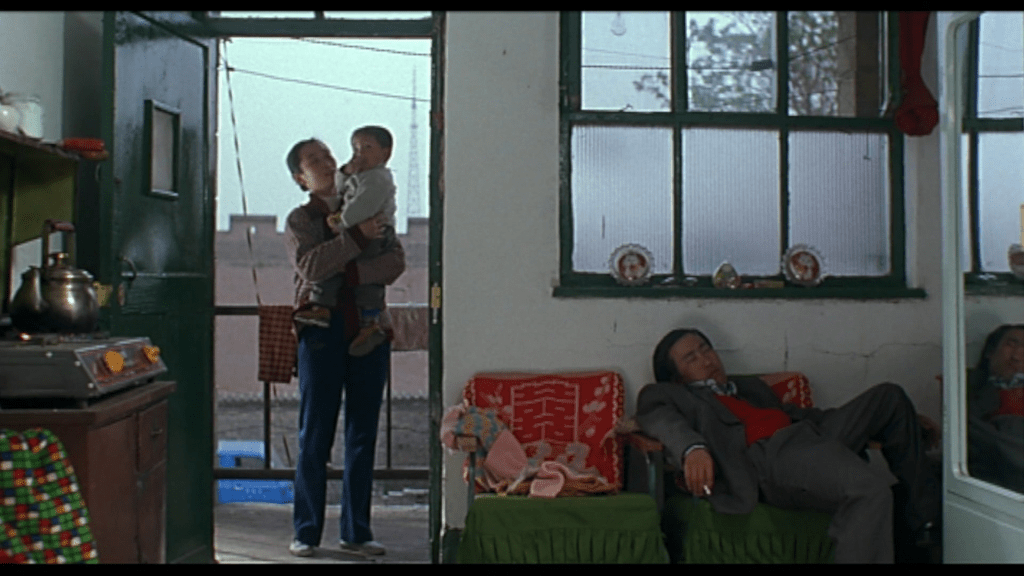
Platform is a monumental effort for a monumental moment in Chinese history, and succeeds surpassingly at capturing the collective cultural consciousness. You can and should watch it on Youtube here!
 The Mezzanine